 Free returns
 180-day guarantee
 10% off your first order


Providing your chickens with the right feed is essential for their health, vitamins intake, egg production, and overall happiness. This chicken feed guide will help you create a balanced diet, manage treats carefully, and understand what chickens can and cannot eat, all of which play a role in keeping your flock thriving. Grit, layer feed, and occasional treats form the foundation of a healthy chicken diet.
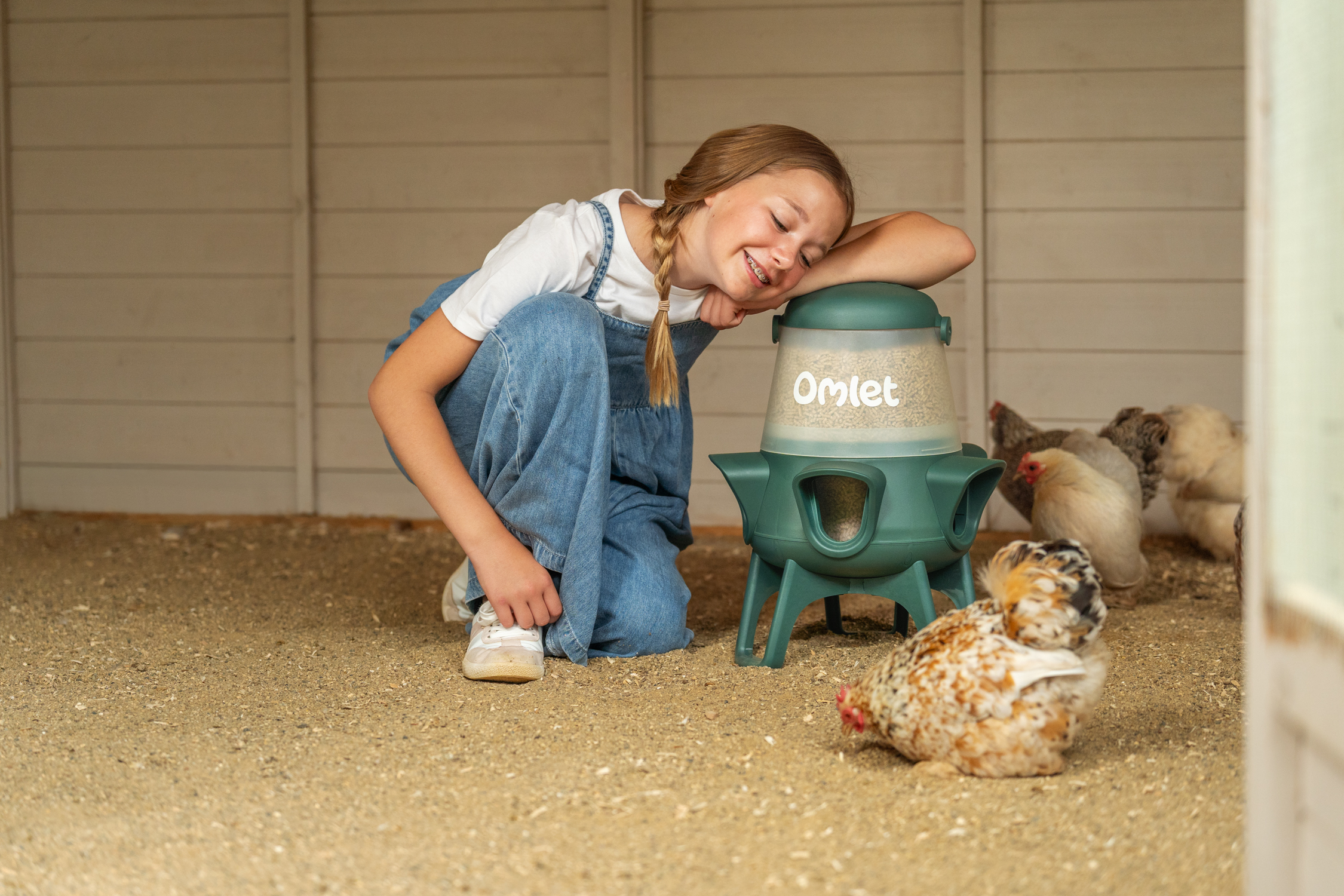
How to Make Chicken Feed
Making your own chicken feed allows you to control the quality and balance of nutrients your flock receives. You can select fresh ingredients and adjust the recipe to suit the specific needs of your chickens, whether they’re growing, laying, or moulting. By mixing your own feed, you can ensure your chickens get a diet that supports their health, productivity, and overall growth.
Grains
Include grains like corn, wheat, oats, and barley as the base of your feed. These provide energy and are a staple for most chickens.
Proteins
Add protein sources such as peas, fish meal, or soy. Protein is vital for growth, the maintenance of healthy feathers, and egg production.
Supplements
Incorporate probiotics, vitamins, minerals, and calcium to support strong eggshells and overall health.
Simple Chicken Feed Formula
| Corn | Wheat | Peas | Oats | Fish Meal | Supplements |
|---|---|---|---|---|---|
| 30% | 30% | 20% | 10% | 10% | As needed |
Mix all ingredients thoroughly. This formula is easy to scale up or down depending on your flock size.
Where to Buy Chicken Feed
You can purchase chicken feed from several reliable sources:
- Online chicken specialists
- Local farms
- Garden centres or home improvement shops
- General pet shops
Choose a supplier that offers high-quality feed suitable for your chickens’ needs.
How Much Food do Chickens need?
Chickens require different amounts of feed depending on their age and breed.
- Adult chicken: around 120g per day (and up to 180g in winter)
- Chick: 28g per day
- Larger breeds may need more, smaller breeds like silkies may need less
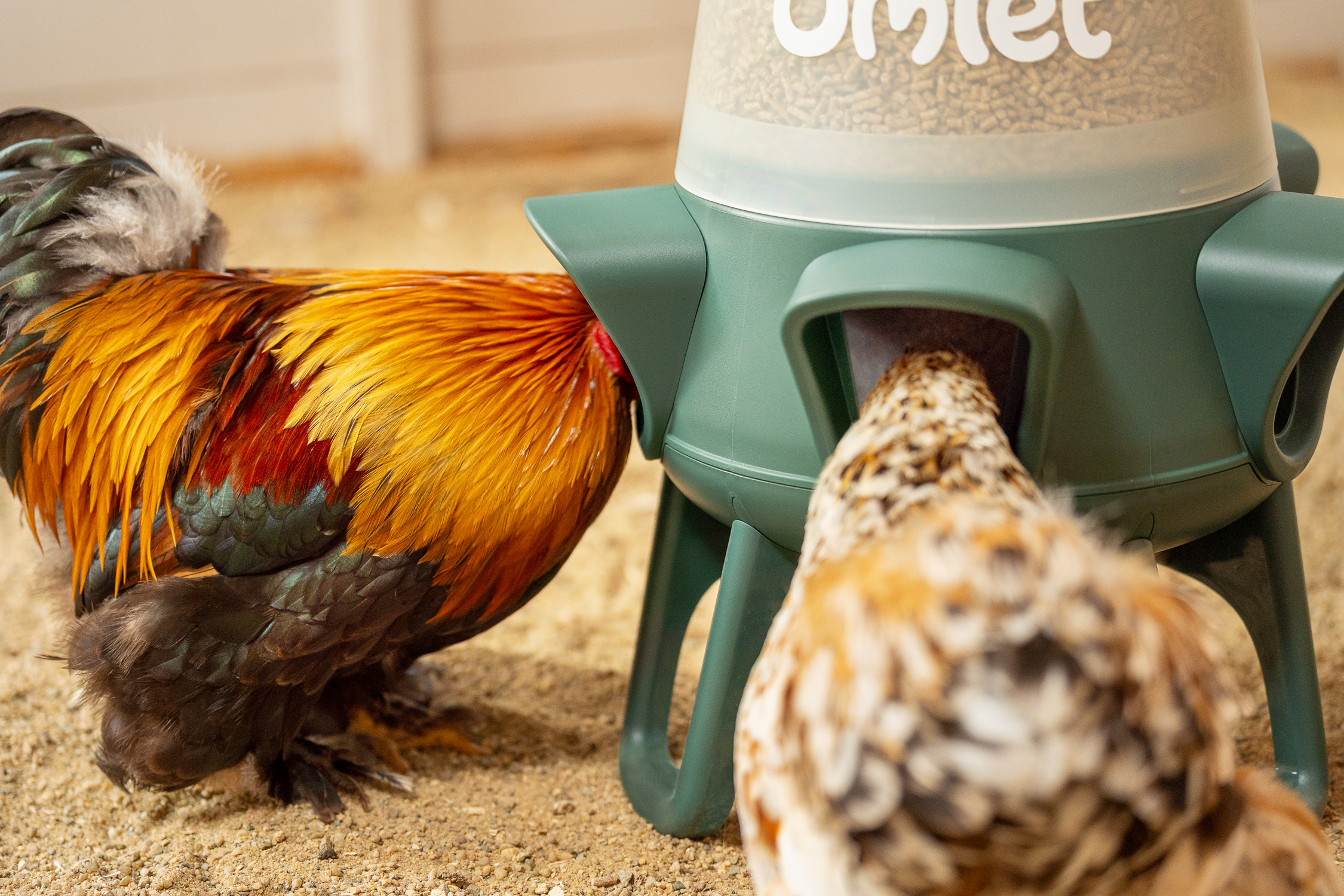
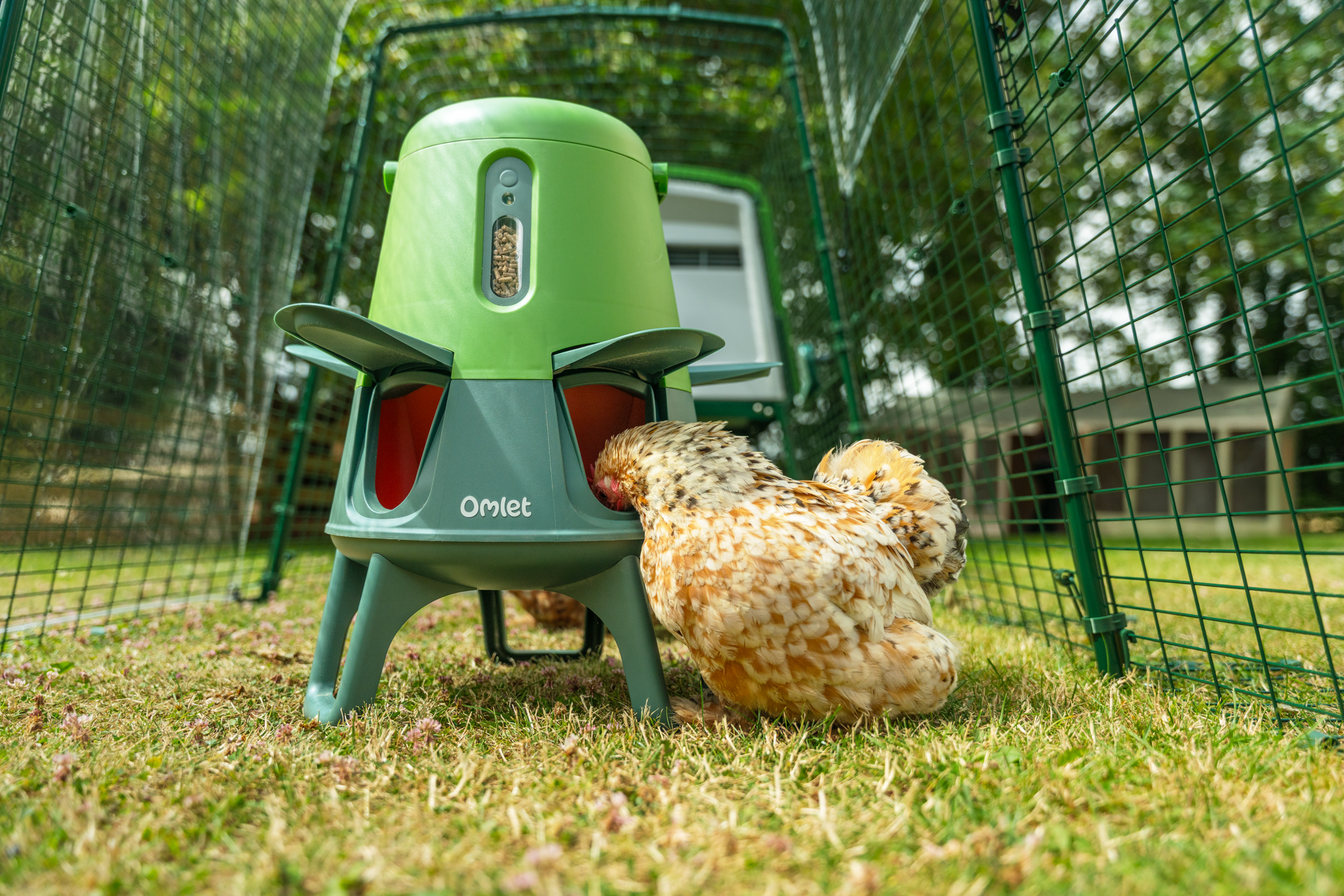
Always provide grit, as it’s essential for chickens to properly digest their food. To keep an eye on feed levels, use a feeder with a window, such as the Omlet No Waste Feeder. Pay attention to signs that a chicken isn’t eating, like lethargy, weight loss, or unusual droppings. Choosing an anti-bully feeder with multiple ports can also help make sure every chicken gets their fair share.
Nutritional Needs for Laying Hens
A laying hen needs:
- 16–18% protein
- Plenty of calcium
- No more than 10% fibre
- Plenty of vitamin D
What Is Grit for Chickens?
Grit is made up of small, hard particles that chickens eat to help them digest their food. Chickens don’t have teeth, so grit helps grind up grains and seeds in their gizzard.
Types of Grit
- Insoluble grit (flint, granite, small stones): Stays in the gizzard and physically breaks down food.
- Soluble grit (oyster shells, limestone): Dissolves and provides calcium for strong eggshells.
Free-range poultry often find their own grit outdoors, but it’s still a good idea to offer grit in a separate dish so they can take what they need. Avoid mixing grit directly into their feed, as chickens will only take as much grit as they need when it’s offered separately. Chicks only need grit once they start eating foods other than chick starter feed.
How Often Should I Feed My Chickens?
Chickens need constant access to food and prefer to eat small amounts throughout the day, fill all feeders every morning and provide spaces for foraging. To avoid overfeeding treats, use accessories like the Omlet Treat Caddi or Peck Toys. These help regulate treats, whilst also providing lots of fun for your flock.
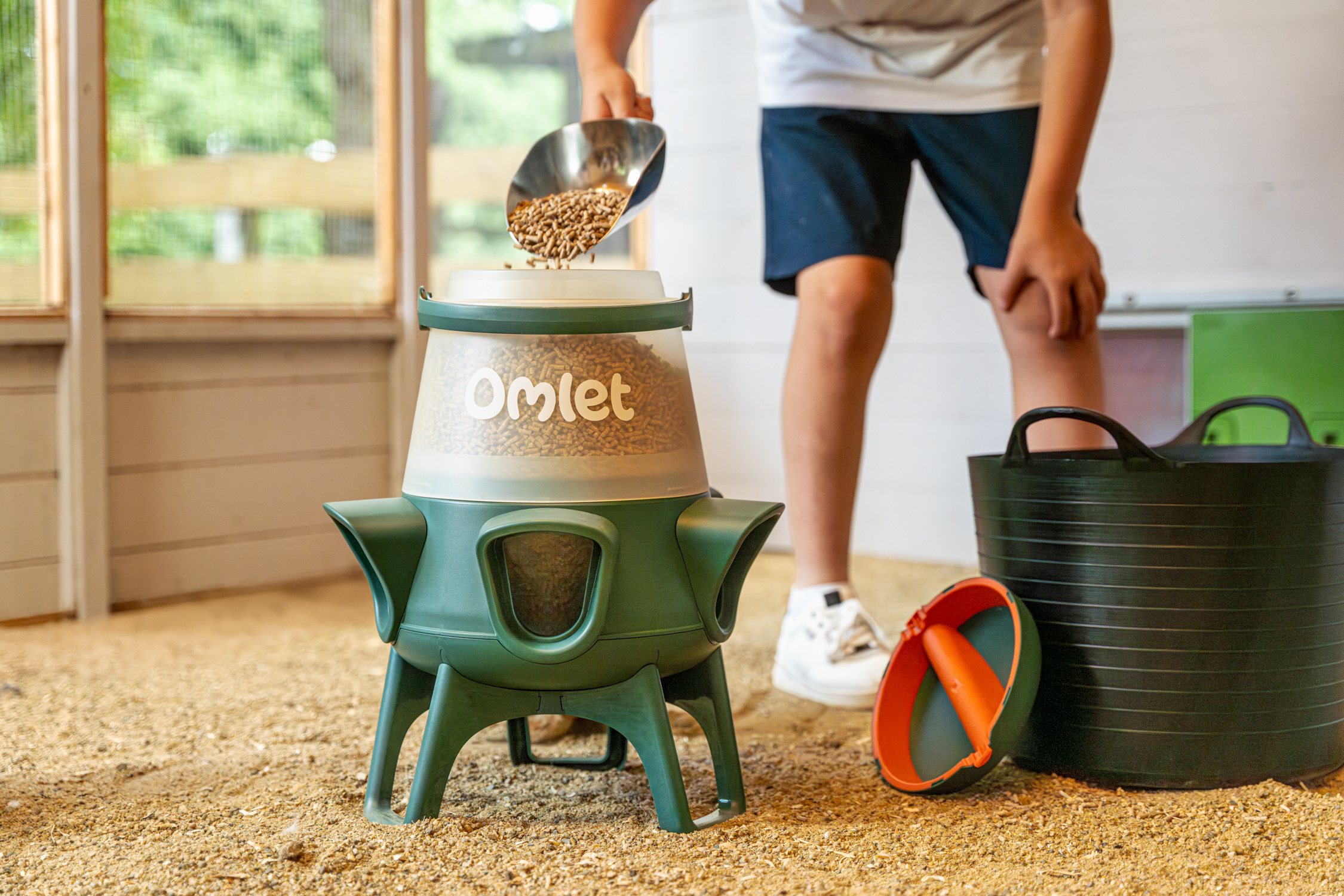
When to Change Chicken Feed
- Switch from chick starter feed to grower feed at 6 weeks.
- Move to layer feed at 18 weeks or when they lay their first eggs, whichever comes first.
- Gradually transition by mixing the new feed with the old over about two weeks.
- When they stop laying for good, transition back to grower feed gradually.
Can Chickens Eat Hay?
Chickens can eat hay, especially nutrient-rich types like alfalfa. Hay is best offered as an occasional treat or to encourage foraging as it provides fibre, minerals, and entertainment, and chickens enjoy scratching at hay bales for bugs and seeds. Hay also offers insulation in colder weather. Too much Timothy hay can cause impacted crop, so stop using it if this occurs. Ensure you always use clean, dust-free hay.
Can Chickens Eat Tomatoes?
Chickens can eat tomatoes in moderation, but you must remove the green parts and avoid feeding green tomatoes, as these contain compounds that are harmful to poultry. Tomatoes are a good source of vitamins C and K and antioxidants. To prepare them, wash and chop them before feeding, and keep tomato plants out of reach in your garden.
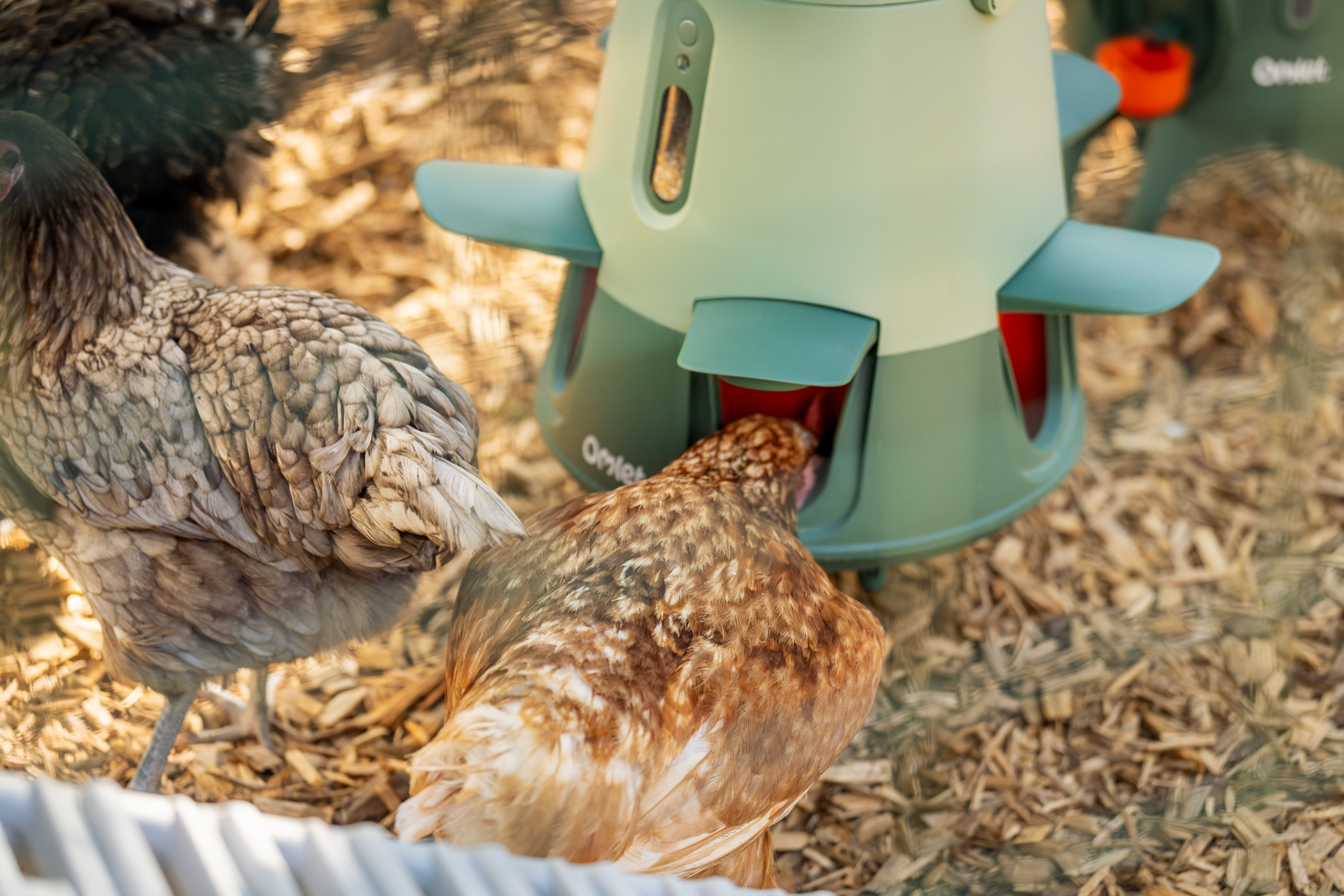
What Do Chickens Love to Eat?
Chickens enjoy treats like corn, greens, and fruits, which can also be a good supplement to their protein intake. Offering a variety of treats keeps your flock engaged and encourages natural foraging behaviours. It’s important to fit treats into a balanced diet, making sure they don’t replace essential feed. Observe what each chicken prefers, as individual tastes can vary, and adjust your treat offerings accordingly. Remember to introduce new treats gradually and always avoid foods that are unsafe for chickens.
Feeding by Age
- Chicks (hatching to 5 weeks): Chick crumbs (19% protein)
- Pullets (6 to 18 weeks): Growers pellets or mash (15–16% protein)
- Laying hens: Layers feed or mash (15–17% protein)
What Foods Are Toxic to Chickens?
Avoid feeding chickens the following foods:
- Avocado
- Chocolate
- Onions
- Garlic
- Raw beans
- Nightshade plants (potato and tomato leaves)
- Moldy or spoiled foods
Summary: Key Takeaways
- Provide a balanced diet of grains, protein, supplements, vitamins, and grit.
- Feed 120g per day per chicken, adjust for breed and age, and increase in winter.
- Offer grit in a separate dish to aid digestion and help your flock lay healthy eggs.
- Feeders with windows and anti-bully designs help ensure all chickens eat well.
- Switch feed types as chickens grow and their needs change.
- Chickens can enjoy hay in moderation, with proper preparation.
- Avoid feeding chickens food that has been through your kitchen to prevent the spread of disease.
- Always avoid foods that are toxic to chickens.
- Treats should be part of a balanced diet, not a replacement for complete feed.


Comments
Sarah, 22 July 2026
Question - how can I get my chickens (3 in an original Omlet chicken coop and 3 meter run) used to the new feeder and insulated water I have purchased to replace the old style hook on ones? Any tips from anyone would be very welcome, thanks.
Leah, 30 April 2020
At what age can pullets free range
Thuocgavip, 18 October 2019
Awesome article! !! Very VERY informative! Awesome information! ! Thank you so much for sharing your knowledge when you don’t have to! Thank you! thuoc ga da
Baby, 3 September 2019
From hatching to one week how many food do they need to feed per chicken
Holloway, 13 August 2019
Don't throw away your prawn shells! Chooks and ducks luuuuv prawn shells!!